
Archuleta County Arrest Records and Court Charges
Archuleta County arrest records are law enforcement and jail records tied to an arrest or booking. They may show arrest information, dates and times, arresting agency, charge information, bond information, and current roster or additional inmate status when shown by sheriff-linked JailTracker or weekly intakes. The Sheriff's Office, not the court clerk, controls sheriff-held criminal justice records such as arrest reports, booking records, and body camera materials.
Court charge records start after arrest when a prosecutor files or pursues formal charges in court. The 6th Judicial District Attorney's Office prosecutes criminal cases in Archuleta, La Plata, and San Juan counties and works with law enforcement agencies in those counties. The full case file and outcome live in Archuleta County criminal court records, while jail custody and roster details belong with inmate records.
Find Archuleta Arrest Records and Charges
Use different channels for the arrest side and the court-charge side. The Sheriff's weekly intakes page links JailTracker for current roster and additional inmate status. Sheriff's records requests are used for criminal justice records, and questions go to 970-264-8432. Court charge information is searched through Colorado Judicial Branch docket tools or requested from the Clerk of Court when copies are needed.
- Check the Sheriff's weekly intakes or JailTracker link for current custody and arrest-related status.
- Use the Sheriff's Records page for arrest reports, booking records, body camera, or other sheriff-held criminal justice records.
- Search Colorado Judicial Branch dockets for court hearing dates tied to a filed criminal case.
- Request complaint or information, disposition or sentence order, ticket, protection order, or register of action from the Clerk of Court.
- Use CBI criminal history checks only as a separate statewide history source, not as a substitute for the local court file.
The Sheriff's Records page is a successful image source assigned to this arrest and charge page.
That sheriff source is the right path for law enforcement records, while filed court charges remain a court records issue.
Charges After Arrest Documents
After an arrest, the charging record begins when a complaint, information, ticket, or related charging document is filed or pursued. A complaint can start a criminal matter. An information is prosecutor-filed. An indictment is a grand jury charging document, though the research did not identify a local Archuleta example. One arrest can lead to multiple charges, and the charge list can change as the prosecutor and court address the case.
| Document | Filed By | What It Does |
|---|---|---|
| Complaint | Officer or prosecutor, depending on context | States the alleged offense and may start the criminal case. |
| Information | Prosecutor | Sets out formal charges filed by the District Attorney. |
| Indictment | Grand jury | Charges an offense through grand jury action when used. |
| Ticket | Officer or enforcement agency | Can document traffic or lower-level charge information in the court file. |
The non-emergency dispatch source is another assigned image source because dispatch is part of the law enforcement access chain for active incidents and non-emergency contact.
Dispatch can route current law enforcement questions, but it does not replace court records or sheriff records requests.
Archuleta Charge Status Meanings
Charge status changes are common. The Sheriff's weekly intakes page warns that original charges may be dismissed, reduced, or plea-bargained by the District Attorney or judge. That warning is important because an arrest charge is not the same as a conviction. The current court record, disposition order, and sentence order are stronger sources for final outcome than an early arrest notice.
| Status | What It Means |
|---|---|
| Pending | The charge is still active and no final disposition is shown. |
| Amended | The charge text, statute, or count has been changed by court or prosecutor action. |
| Reduced | The charge has been changed to a lower level or lesser offense. |
| Dismissed | The charge or case has been ended by court order or prosecution action. |
| Plea-Bargained | The charge path changed through a plea agreement or negotiated resolution. |
Charges vs Convictions
A charge is an accusation. A conviction is a guilty plea or finding of guilt. Archuleta County arrest records and court charge records may show accusations that never become convictions. Readers should check the court disposition before treating any charge as final, especially when a sheriff intake, jail roster, or booking notice is the starting point.
| Topic | Charge | Conviction |
|---|---|---|
| Record Stage | After arrest or filing | After plea, verdict, or judgment |
| Meaning | An alleged offense | A final guilty result |
| Can Change | Yes, it can be amended, reduced, or dismissed | May be challenged, sealed, or affected by later orders if eligible |
| Best Document | Complaint, information, ticket, or register of action | Disposition and sentence order |
Sheriff Records and Jail Context
The Archuleta County Sheriff's Office is located at 85 Harman Park Drive in Pagosa Springs, and the Detention Facility is at 125 Harman Park Drive. Sheriff Mike Le Roux is named in the research. Jail and booking information is part of the law enforcement side. The Detention Facility's purpose includes ensuring court appearances before adjudication and administering court-ordered sanctions or punishments for convicted people.
Sheriff criminal justice records require the Sheriff's records process. The research lists a $5 nonrefundable research and retrieval fee for every request to inspect public records, $33 per hour for staff time for research, retrieval, or redaction, and $15 per USB or DVD for electronic media such as body camera footage or pictures. Some requests may require District Attorney approval.
The Sheriff's programs and services page is one assigned image source for this page.
That sheriff office context helps separate public safety services from court case document requests.
Investigation Records and Limits
Investigation records, evidence release, and active case materials follow law enforcement rules, not ordinary court docket access. The Sheriff's records page says ACSO provides legally allowed records in its custody for public inspection under children's code records law, CORA, and CCJRA. It also warns that dissemination is authorized only to the requestor under C.R.S. 24-72-305.5, and secondary dissemination may violate statute.
The Sheriff's investigations page is another successful assigned source.
Investigation records may be withheld or delayed when release would conflict with criminal justice restrictions or active case needs.
DA and Defense Access
The Archuleta County page for the 6th Judicial District Attorney explains that the District Attorney is elected by voters in Archuleta, La Plata, and San Juan counties, prosecutes criminal cases within the district, and works closely with law enforcement. The current District Attorney name and full local office contact were not captured in the official source, so those details are not supplied here.
The official Archuleta District Attorney page is an assigned image source.
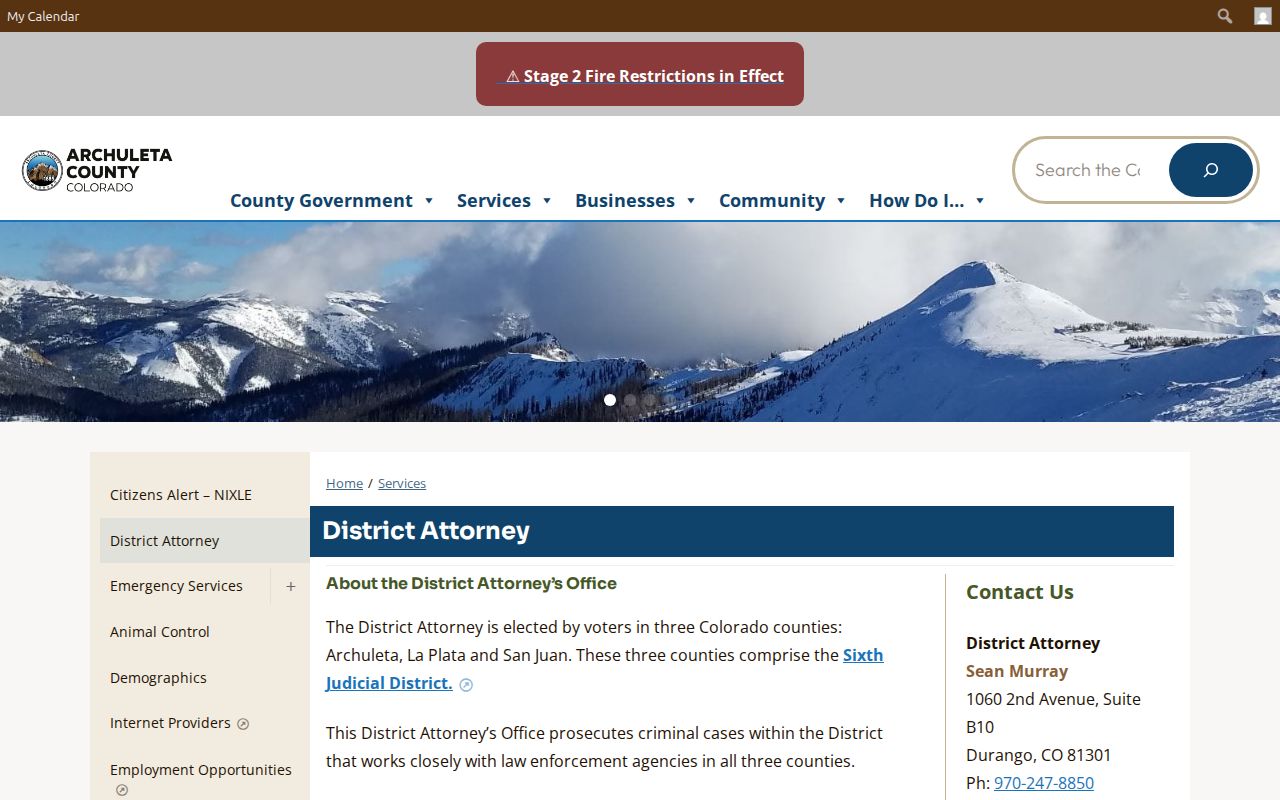
The DA source supports the central point that prosecutors, not the Sheriff's Office, control formal charging decisions after arrest.
Statewide Charge History Checks
The Colorado Bureau of Investigation records check site is a statewide criminal-history access channel, separate from Archuleta County court files and sheriff records. It may help with broader criminal-history research, but it does not replace the local court docket, the court record request form, or sheriff-held criminal justice records. Charge history, final disposition, sealing, and expungement questions may require checking both court and state systems.
The CBI records check site is the final successful image assigned to this page.
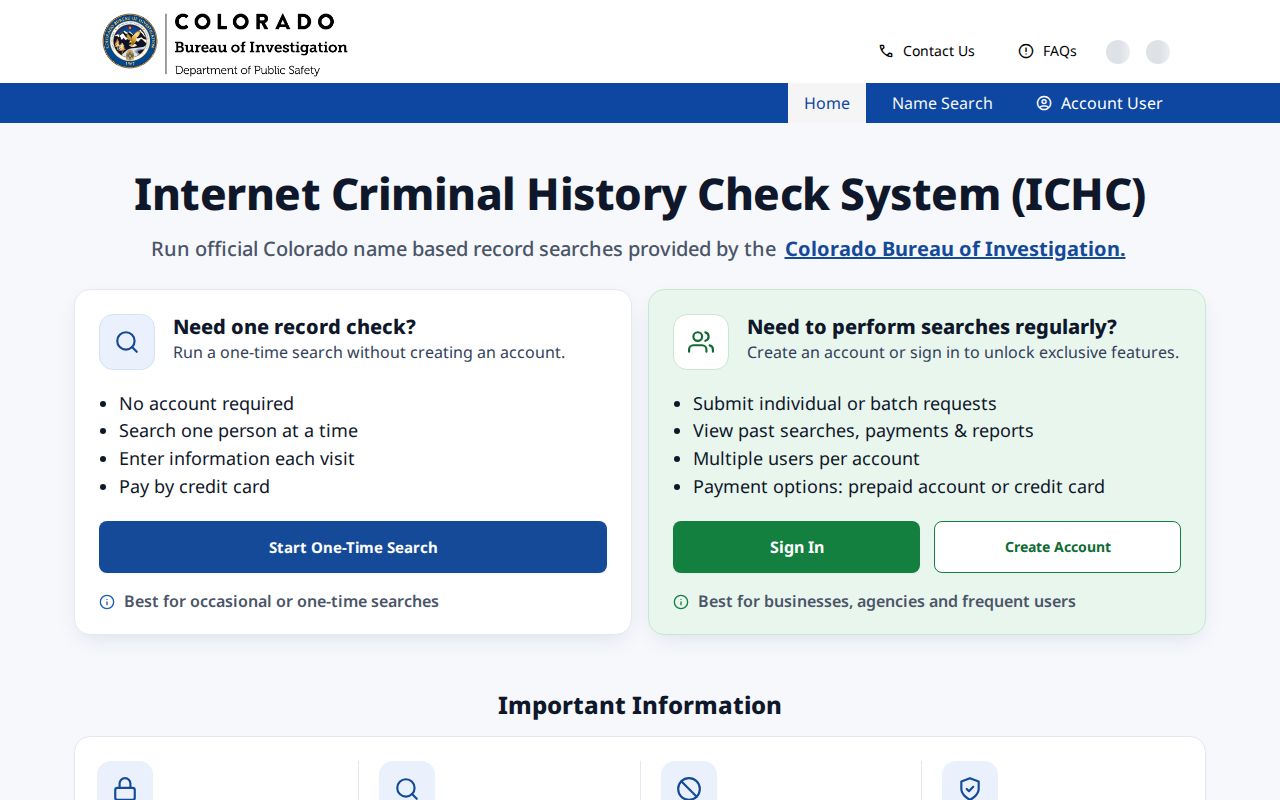
Statewide CBI access is useful for criminal-history searches, while Archuleta records identify the local arrest, charge, and case pathway.
Sealed vs Expunged Charges
Colorado separates sealing from expungement. Sealing limits public access to a record while preserving it for authorized entities. Expungement removes or destroys eligible records and is often tied to juvenile matters. Arrest sealing may involve the court and CBI, while juvenile delinquency expungement uses Colorado Judicial juvenile expungement forms. The automatic sealed-case search confirms only C.R.S. 13-3-117 automatic sealing, so it is not a complete statewide sealing history.
| Topic | Sealed | Expunged |
|---|---|---|
| Effect | Limits public access while the record still exists | Removes or destroys an eligible record under the applicable process |
| Common Use | Eligible adult arrests, charges, and criminal records | Juvenile delinquency and other eligible matters |
| Starting Point | Colorado Judicial sealing forms, court order, and sometimes CBI follow-up | Colorado Judicial juvenile expungement forms where eligible |
Restricted Archuleta Arrest Records
Some arrest and charge records are restricted. Juvenile law enforcement and court records are limited under Colorado law. Sealed and expunged records are not ordinary public records. Active investigations, sealed warrants, suppressed cases, protected personal information, victim data, minor information, and confidential materials may be redacted or withheld. The Colorado Judicial sealed-case search confirms only automatic sealing under C.R.S. 13-3-117 and does not cover every sealing path.
Important: Arrest, charge, and criminal-history records should not be treated as final convictions without checking the court disposition.