
Archuleta County Criminal Court Records
A criminal court record is the court file kept after a criminal case opens. It is not the same as an arrest report or a jail booking entry. In Archuleta County, felony cases are district court matters, while misdemeanors may appear in county court or municipal court depending on the charging source. Pagosa Springs Municipal Court handles municipal traffic, misdemeanor, animal, parking, and code violations. The Clerk of Court is the local contact for criminal case documents filed in the state court system.
The criminal case file can include the complaint or information, ticket, protection order, register of action, minute orders, bond entries if reflected in the court record, plea, disposition and sentence order, and other orders. For the narrower path from arrest into formal charges, see Archuleta County arrest records and court charges. For all civil, family, probate, and traffic case file access, use the broader Archuleta County court records page.
Search Archuleta County Criminal Cases
Criminal case access starts with the Colorado Judicial Branch docket search for hearing dates and then moves to the Record/Document Request Form for copies. The form includes criminal document options such as complaint or information, disposition or sentence order, protection order, ticket, and register of action. Use Archuleta County as the county or location of record when known, and select felony or misdemeanor as the case type when that information is available.
- Check the Colorado Judicial Branch docket search for active hearing dates or public calendar entries.
- Use Archuleta County, the Archuleta County Courthouse, or the 6th Judicial District to narrow the search.
- Gather the defendant name, case number, filing year, case type, and date of birth if known.
- Submit the Colorado Judicial Record/Document Request Form for criminal documents not shown on the docket.
- Ask the Clerk of Court about certification, fees, government ID, or access limits when a file is sealed, suppressed, juvenile, or confidential.
Statewide criminal-history checks are separate from court case files. The Colorado Bureau of Investigation provides a criminal history records check site, while court records are requested through Colorado Judicial Branch and the Clerk of Court. A CBI result may not include every court document, plea paper, minute order, or sentence order in the local court file.
Archuleta Criminal Case Stages
Criminal court records become more useful when read in sequence. A case may begin with a complaint or information, move through arraignment, proceed into pretrial settings and motions, resolve by plea or trial, and end with disposition and sentencing. The District Attorney for the 6th Judicial District prosecutes criminal cases in Archuleta, La Plata, and San Juan counties and works with law enforcement agencies across the district.
Case flow: Charges Filed › Arraignment › Pretrial / Motions › Plea or Trial › Disposition › Sentencing
| Stage | What Happens |
|---|---|
| Charges Filed | The complaint, information, ticket, or other charging paper opens the court case. |
| Arraignment | The defendant is advised of the charge and enters a plea. |
| Pretrial / Motions | The parties address discovery, bond, protection orders, motions, plea talks, and readiness. |
| Plea or Trial | The case resolves by plea, trial verdict, dismissal, or other court order. |
| Disposition / Sentence | The final outcome and court-ordered sentence, costs, restitution, or conditions are entered. |
The Colorado State Public Defender Durango office serves Archuleta County and is relevant when a defendant applies for appointed counsel.
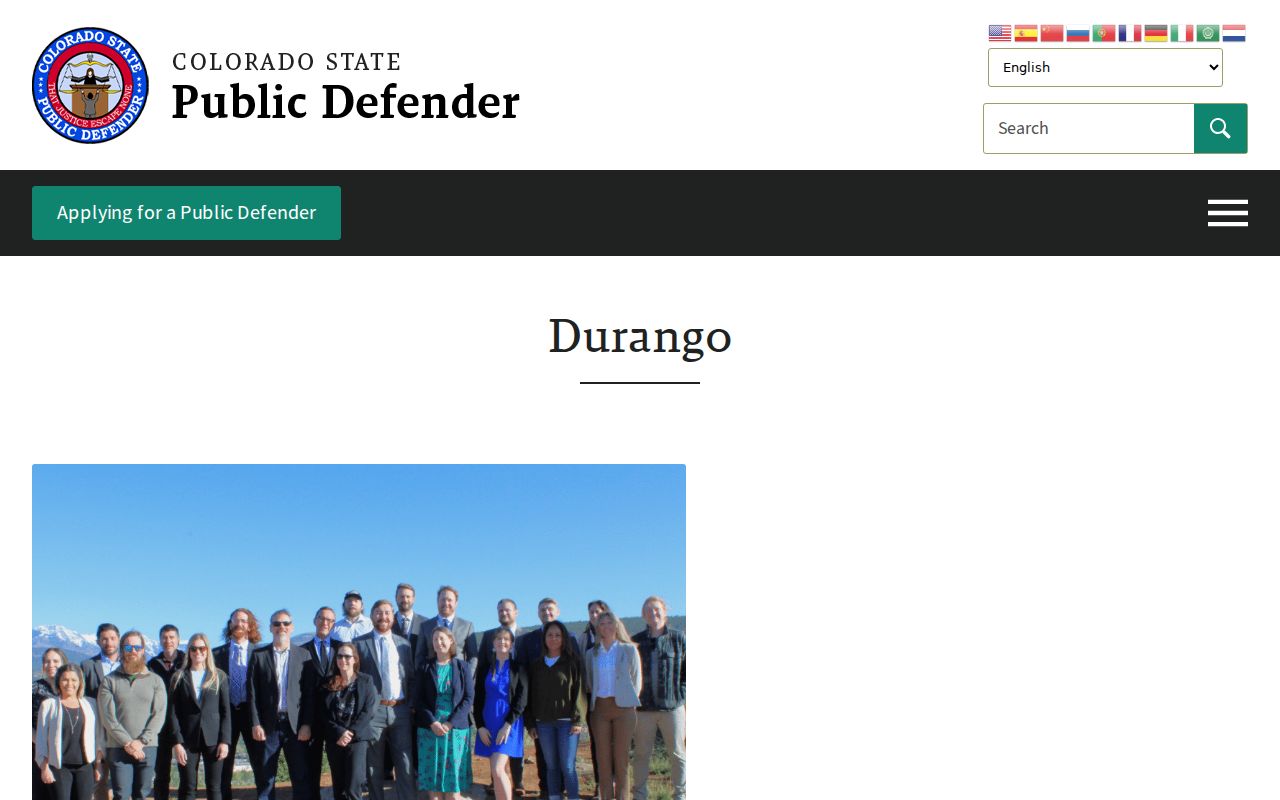
Public defender eligibility is separate from record access, but the office is part of the same criminal court process.
What Archuleta Criminal Records Show
An Archuleta County criminal court record can show identifiers, case events, charges, plea history, orders, disposition, and sentencing terms. The research defines a register of action as a brief explanation of a case that may include charges, sentences, and minute orders. Court financial entries may include fines, fees, costs, restitution, or bond-related information if part of the court record. Sheriff's weekly intakes, by contrast, report arrest, charge, and bond information from the jail side and warn that charges may later be dismissed, reduced, or plea-bargained.
| Field | What It Shows |
|---|---|
| Case Number | The court identifier, often using year, case type, and sequence information. |
| Defendant | The person charged in the criminal case. |
| Complaint / Information | The charging document that states the alleged offense. |
| Hearing Entries | Arraignment, readiness, motion, trial, restitution, or sentencing settings. |
| Plea | The defendant's formal response, such as guilty or not guilty. |
| Disposition | The final result of a charge or case, including dismissal, plea, conviction, or acquittal. |
| Sentence | Court-ordered terms after conviction, such as custody, probation, costs, restitution, or conditions. |
The public defender application instructions are one successful manifest source tied to criminal court workflow.
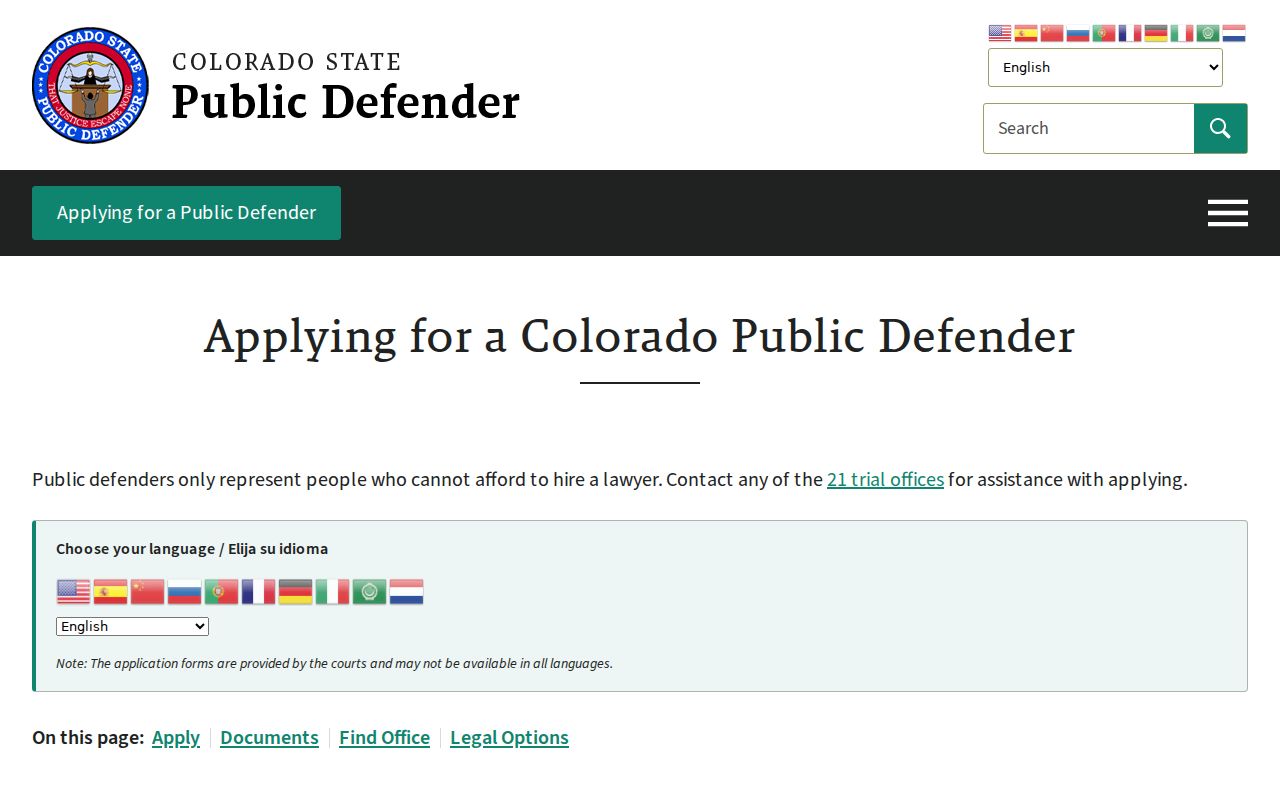
Application review does not change the public case record, but counsel status can affect later entries and hearings.
Archuleta Charges vs Convictions
A charge is an allegation filed in court. A conviction is a guilty plea or finding. The distinction matters because the Sheriff's weekly intakes page states that original charges may be dismissed, reduced, or plea-bargained by the District Attorney or judge. Criminal court records can preserve that path, showing charge history, amended charges, dismissed counts, plea results, and sentence orders.
| Topic | Charge | Conviction |
|---|---|---|
| Meaning | An accusation filed by law enforcement or prosecutor | A guilty plea or finding of guilt |
| Timing | Appears early in the case | Appears after plea, verdict, or judgment |
| Change Risk | May be amended, reduced, dropped, or dismissed | May control sentence, points, custody, or later sealing analysis |
| Best Source | Charging document and register of action | Disposition and sentence order |
Read Dispositions and Sentences
Disposition is the final outcome of a charge or case. A sentence is the punishment or court-ordered terms after conviction. Common record terms include dismissed with prejudice, dismissed without prejudice, conviction, plea, judgment, sentence, bond, protection order, restitution, transcript of judgment, and satisfaction of judgment. A disposition or sentence order is one of the criminal document options on the Colorado Judicial record request form.
For sentenced state-prison offenders, the Colorado Department of Corrections inmate locator is a separate state custody channel, not the local court file.
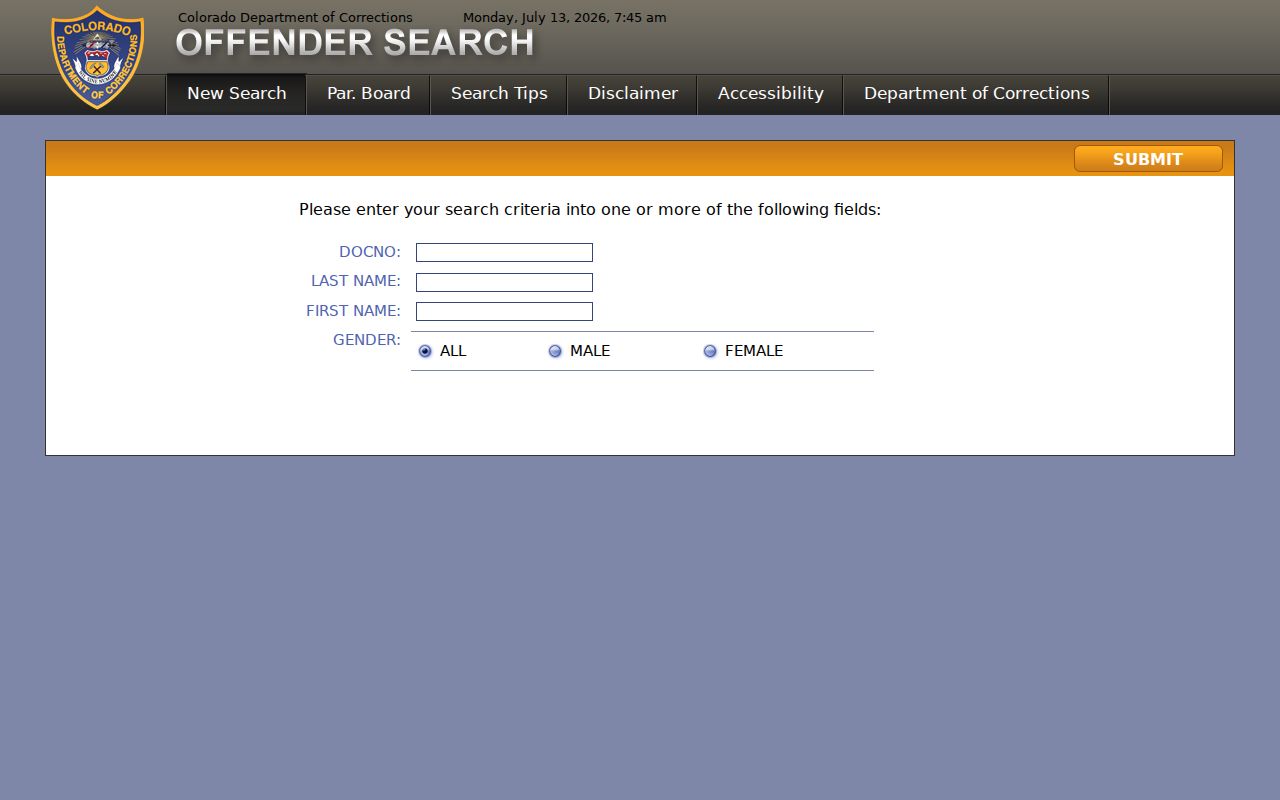
DOC records can help locate a sentenced person, while the Archuleta court record explains the court outcome that led there.
Sealed and Expunged Records
Colorado uses different processes for adult criminal sealing, automatic sealing, arrest sealing, and juvenile expungement. A sealed record still exists but is hidden from ordinary public access. Expungement is used often for juvenile matters and removes or destroys eligible records under the applicable process. The Colorado Judicial "Seal My Case" self-help category and JDF forms are the official starting point for court-filed requests.
| Topic | Sealed | Expunged |
|---|---|---|
| Public Visibility | Limited or hidden from ordinary public inspection | Removed or treated as no longer publicly available under the expungement process |
| Common Use | Eligible adult criminal records, automatic sealing, and some arrest records | Juvenile delinquency records and other eligible matters |
| Research Limits | Automatic sealed-case search confirms only C.R.S. 13-3-117 sealing | Juvenile expungement rules are separate and restricted |
The CBI court-order sealing source was assigned as a successful image for this criminal court records page.
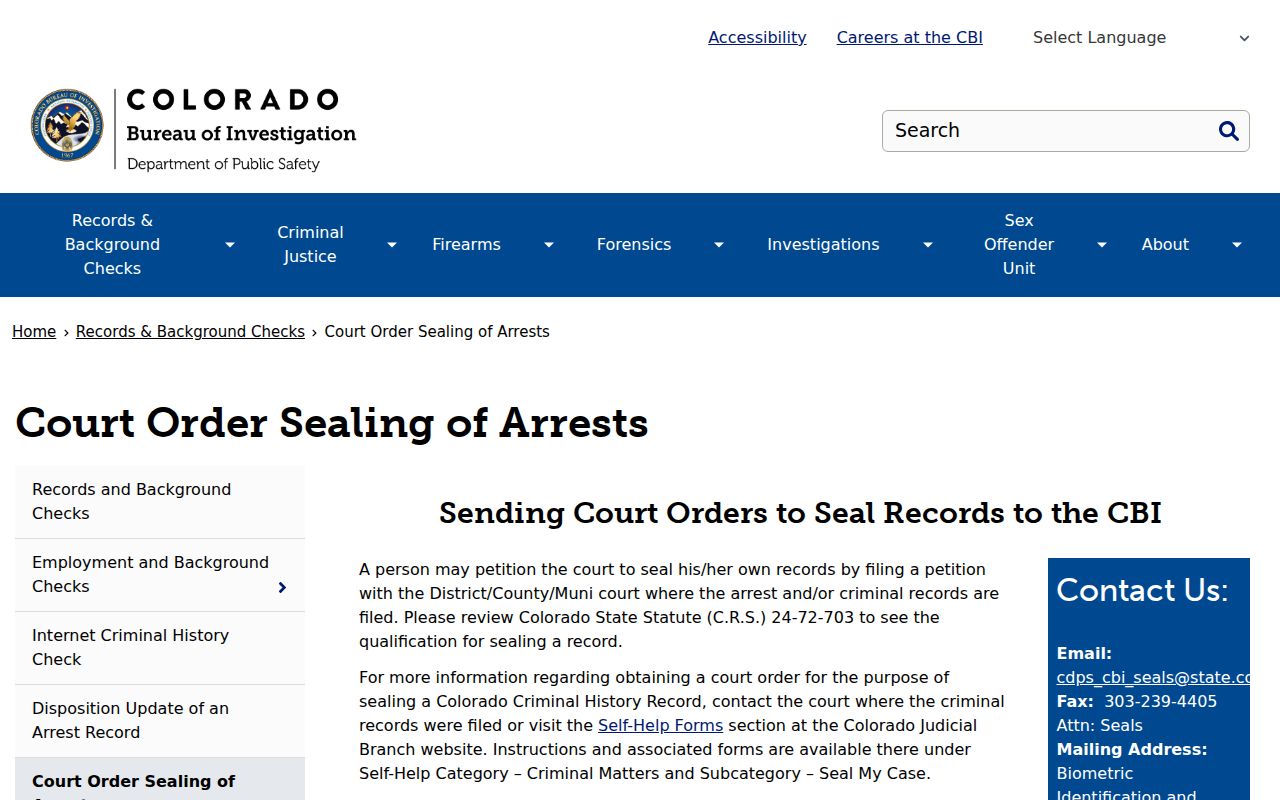
CBI sealing procedures can matter after a court order, but the court file and the state history record remain different systems.
Public Access to Archuleta Criminal Records
Public access depends on the source. Court case records are governed by Colorado Judicial Branch rules, Chief Justice Directive 05-01, and P.A.I.R.R. Sheriff's arrest reports, body camera, and booking materials are criminal justice records under the Colorado Criminal Justice Records Act. County administrative records use CORA. Juvenile records, sealed cases, suppressed cases, probate or confidential materials, protected personal information, and some victim or minor information may be withheld or redacted.
Key Access Rules:
Chief Justice Directive 05-01 / P.A.I.R.R. governs public inspection of Colorado court records at reasonable times.
C.R.S. 24-72-301 et seq. governs sheriff criminal justice records rather than ordinary county CORA files.
The Colorado Judicial seal-my-case source was also assigned to this page.
That source supports the page's distinction between public criminal files and records that may be sealed or expunged.
Restricted Archuleta Criminal Court Records
Restricted criminal records include juvenile matters, sealed cases, suppressed cases, protected personal information, and confidential portions of a file. The court request form warns that juvenile records, suppressed cases, probate records, or records with confidential or protected information may require U.S. government-issued photo ID. A "no result" on the automatic sealed-case search is not proof that no sealing occurred under another procedure. When a criminal case also involves jail visits, bond posting, commissary deposits, or custody status, those details come from the Detention Facility and sheriff sources, not from the criminal case file itself.